To Every Thing There Is a Season

This week, after about 6 months of being a cancer patient, I’m done. Treatments have ended and most side effects are subsiding, and it’s like a switch was flipped in my brain—time to move on.

For the past several months, I’ve lived into the season of rest and healing, laying low, enjoying comfort food, and taking a break from exercise because I was sore and very tired. I gave myself permission to step away from the stress of work to finish up treatments and recover, and took frequent naps.

But now, it’s a new season. Time to get off the couch and exercise. Time to get back to eating right. Time to get back to health and put the “patient” designation behind me.

I’ve thought a lot lately about what I’m supposed to do with this cancer season. What impact does it have going forward? Am I supposed to be in some way changed or different as a result? And the answer I keep coming back to is, I don’t really know, but at this point, I don’t see this experience really being that different from any other. It’s just one of many seasons that has shaped and will shape who I am. Maybe it’ll end up having a big impact, and maybe not. Like many other experiences, I might not know exactly how it’s woven into the rest of my life until some later season, and I guess that’s OK.

Someone Will Always Have More

As a breakfast diversion, I was watching the Today Show (or maybe Good Morning, America—they all seem the same). One of the segments was about two NFL stars who went undercover for a day as homeless men to learn a bit about the people who live on the streets and to bring awareness to the issue. After airing the video footage, the hosts talked with one of the players in the football locker room, all cleaned up and back in his designer T-shirt, surrounded by jerseys and gear with his name and number on them. The hosts asked about his insights and, with furrowed brows, waxed eloquent about poverty in this country and the plight of people who are homeless. Almost immediately after that segment, they broke into surprised laughter while showing viewers a fancy pink designer handbag, adorned with gold and diamonds, that had sold at auction for $200,000, some sort of record. What a contrast in have nots and haves!

Later that day, I had a discussion with my son about the home of one of the boys leading a high-adventure trip he is going on next summer. After attending several meetings at that home, my son had become impressed with its size and furnishings and declared that this family must be “loaded.” Apparently this boy also doesn’t need to do any fundraising for the expensive trip, as we’ve asked our son to do. “It must be nice,” he said. He also shared that a big topic of conversation among some of his peers lately (all of whom are 16-ish) is what kind of car they’re getting or will be getting; he finds this topic annoying, he says, because we’re not gifting him with a car. He went on to tell me how his goal as an adult is to be rich like, he believes, most of his friends’ parents are. I suggested that he should aim, instead, to be a good person, help others, and have a career that makes him happy and allows him to live a comfortable life.

We live in a world of vast differences in wealth, from people who have more money than they could spend in a lifetime despite purchasing every toy and luxury known to man, to people who lack enough money to procure the basics of life like food, water, shelter, and health care. I told my son that just as he looks at that one boy’s family and thinks they have it made, there are others who would look at my son’s life and think the same—and I don’t just mean starving children in Africa, but other teens right here in the Pittsburgh area.

I reminded him that no matter how much money you make, there will be those who have more than you and those who have less. Unless you end up as the richest person in the entire world, someone will always have more than you. If your success is based entirely on your wealth, and your happiness dependent on how your wealth compares to others’, you can easily find yourself constantly pursuing more. You will never feel you have enough, will never be content.

But it’s hard to talk to a teenage boy about the more intangible measures of the good life, particularly when TV ads promote luxury cars as a sign that you have “arrived,” we hear often about the multi-million dollars our sports stars are paid, and many people are talking to my son about where he will go to college so he can get a “good” job in his desired field. Not that there’s anything at all wrong about wanting a career that will bring in a good salary—I do wish that for both of my boys, so they can have a nice home, take a vacation now and then, and provide for the needs (and many of the wants) for their own children someday. At the same time, I surely hope that we have adequately conveyed through word and deed that there is more to life than your bank account balance, the size of your house, the number of times you have traveled overseas, and the number of toys you have in the garage or media room.

An Uncomfortable New Title

Survivor. I have been reminded by a few folks that in just a week’s time, I will get to wear that moniker, when cancer treatments have ceased (with the exception of long-term drugs) and I can return to normal life. As normal as life is for anyone. It is a moniker I’m told I’ve earned and I should wear it with pride, knowing I’ve beaten the Cancer Beast.

But it is one I am uncomfortable with, and I’ll tell you why.

Generally speaking, cancer can be deadly. My experience with cancer, however, did not rise to life-threatening status. I was told from day one that my cancer was highly treatable and my prognosis excellent. I was told soon after that the genetic makeup of my tumor indicated a low likelihood of recurrence. Cancer wasn’t going to kill me this winter/spring—and maybe it won’t in the future. So, I don’t feel like I’ve done battle with a deadly foe.

The treatments I have gone through, although tedious and resulting in unpleasant side effects, have not entered the category of major adversity. Not to downplay the fatigue, soreness, and brain fog that have ensued, but I got pretty off easy. I never lost my appetite, lost my hair, couldn’t get out of bed, or cried in agony. I never faced a day where I thought, “I can’t endure this any more” but pushed on anyway. Again, not much of a fight on my end.

I know, cancer is cancer. It stinks no matter what the kind of cancer, what the type of treatment prescribed, and how long the course of treatment. It’s scary and disruptive and painful, emotionally and physically. And because it certainly can have dire consequences for some, I understand the need to give a major attaboy or attagirl to someone who’s lived through it and come out on the other side in relative good health.

But at the same time, why is cancer a sort of “king” of diseases? Why do we have a special, honored title for people who make it through cancer treatment but not for people who go through other diseases, whether acute or chronic?

What about other people with other diseases and conditions? Particularly those who don’t just have a season or a year of living with a disease, but year after year after year?

  • The man with muscular dystrophy who faces the loss of physical abilities little by little—yet greets each day with determination and grace and even manages to go on a mission trip with his family? What do we call him?
  • Or the woman who daily pricks her finger, adjusts her insulin pump, and tries not to worry about potential vision loss  or nerve damage from a lifetime of diabetes—yet takes every healthy step she can to live a full life with her husband and kids? What’s the special name for her?
  • The elderly parent who struggles with confusion and fear as he loses his faculties to Alzheimer’s Disease—yet still tries to interact with family members, friends, and nurses? What’s the badge of honor he wears?
  • Or the girl with severe asthma who relies on inhalers and nebulizers to keep breathing—yet still signs up for the softball team, determined to play just like the other kids. Does she get a special title?

And then there are those who don’t survive cancer. What of the mom who pursues every treatment and fights ’til cancer steals her very last breath? Or the man who decides to forgo punishing chemo treatments to live out his days without the associated side effects, knowing that it means far fewer days? What do we call those folks?

I’m not in any way advocating for removing the term “survivor” from the cancer vernacular. And I certainly don’t mean to discount the term, criticize it, or imply that others should ever hesitate to call themselves that, proudly wear the word on T-shirts, and celebrate that title every second if they want to.

All I’m saying is that I am struggling with the label as applied to me and my circumstances. It is one of the many words, concepts, and experiences I have wrestled with—and continue to wrestle with—on this cancer journey.

Bells

st-bernard-roman-catholic-church-mt-lebanon-pa

In our town, there are lots of old, stone churches with bells. The bells chime and peal every Sunday and at various other points throughout the week. And every time I hear them, I have to stop and listen.

Something about that sound, ringing out and carrying on the wind, tugs at my heart.

The bells I hear today also rang out in those very church steeples 50 or 100 or more years ago. In fact, the sound is the same as what’s been ringing out in nations around the globe for centuries. It connects me to generations past, to traditions that originated in ages gone by. To think of all the meetings and masses, weddings and funerals, baptisms, confirmations, and first communions!

The bells serve to call people together—at least they did, before we all wore watches or carried cell phones to give us the time. Folks around town would hear the bells, and stop their chores and other activities to join together in a common purpose—to worship, mark a friend’s passing, or maybe conduct town business. As the bells toll, I am reminded of the importance of community and grateful for the sense of belonging that comes with it.

And the bells make me more aware of the passing of time. Each hour marked by the bells’ peals becomes a moment in the past that cannot be reclaimed.

The bells stir in me a nostalgia about the past, while reminding me how fleeting life is, how precious each minute ought to be. I cannot help but give thought to how my life has been shaped over the past four decades, even as I wonder what will transpire before the next time that familiar sound floats on the breeze through my window.

Same Stuff, Different Day—or Is It?

calendar

Going to radiation daily can start to feel like the movie Groundhog Day with Bill Murray. Each day is the same, like someone hit the rewind button and is playing the scene over and over. The same steps to check in, same therapists and doctor, same patients coming and going. Same The Price Is Right on the waiting room TV. Same hard table and drafty treatment room.

I know the sights and sounds I’ll encounter, the faces I’ll meet each day. It’s easy to press the auto-pilot button and go through the motions like a robot.

Some days I fall into that mode—I know what to expect, and by and large, that’s all I experience.

But on other days, I manage to be a bit more present and notice things around me, and the drudgery of this process is lessened a little. Today, the lady in the time slot before mine finished her last treatment. She walked out of the doctor’s office with a smile on her face. I smiled silently with her in celebration. An older woman came in to the changing area right after me—I suspect she was there for her first radiation appointment, because she wore the same look of “I’m trying to be cheerful, but I’m really freaked out” that I had on my first day. My heart whispered a little prayer for her. A toddler issued an unspoken challenge to a smiling contest in the elevator. The little girl won, hands down, and my spirit was lifted as I walked to my appointment.

The radiation treatment experience is not unique in its repetition. Much of life centers on doing the same thing again and again. Whether interacting in the workplace, raising children, tending a garden, or even leading worship on Sundays, we can get so used to the processes and people that we stop fully engaging. Even things we love doing can start to feel rote and mundane when we do them all the time.

Unexpected diversions that interrupt our routines may capture our attention, if they’re big enough. But do we go into each day, into each one of our daily places and rhythms, expecting to see something worthy of note? Do we anticipate extraordinary moments—however small—in the midst of the ordinary? And do we pause and appreciate those things when they occur?

If we rise each day with the feeling of same stuff, different day, it’s likely we’ll get just that. If we begin the day, however, with a desire to experience something new and special—and we maintain an attentiveness to the world around us—odds are that desire will be fulfilled.

Tired and Tiresome

For the past couple of weeks, I’ve been feeling pretty well. I’ve had my moments of feeling down or worn out and experienced some minor side effects, but by and large, I could honestly answer “I’m good” when asked how I was doing with treatments. This week, it’s like someone flipped a switch. The radiation has taken a toll—there’s an aching and burning almost all the time, sharp pains make me wince when I move certain ways, and my skin is an irritated mess. Each day seems worse than the previous. The physical toll is catching up to what has thus far been largely psychological.

I’m also feeling increasingly tired. But more than that, I fear I am becoming tiresome. This week, when asked how I’m doing, I have found myself responding with “I’m hanging in there” or “I’m OK [insert shrug].” I suppose I could fib, and maybe I should. Because that’s easier for the inquirer. When we ask someone how they’re doing, let’s be honest, we secretly want them to say, “I’m doing fine, thanks.” That lets us off the hook—we’ve shown that we care by asking, but then we can move on with our day. And even if we ask the question out of heart-felt caring and are prepared for an honest answer, don’t we, deep down, want to hear that our friends and loved ones are doing well?

Any other response leaves us in the position of either coming up with a quick word of encouragement before we go on our way, or asking follow-up questions and settling in to a longer conversation. If we choose the latter path, we then enter, at least temporarily, into the other person’s space of trial, pain, uncertainty, or grief. I don’t like being the person residing in that space and opening the door for others to enter. (Yet, it’s hard to remain behind that door alone.) I don’t like being “that” person—the one who, if you ask how I’m doing, might just tell you.

I also know that this time of treatment is a drag for my colleagues. Everyone is very gracious and helpful. They all say that I need to put my health first, the work will get done somehow, not to worry. And I know that they mean that, at least for the most part. But, I’ve been in their shoes—the one to pick up someone’s slack because they’re ill or facing some other personal issue that results in frequent time away. Although I’d never grumble in those situations, if I’m honest, in the darkest corners of my heart, there is a little nugget of frustration when I have to finish someone else’s task, or that person has to cancel a meeting for the third time because of a doctor’s appointment. I know that my being out of the office some of each day, and needing to take the occasional day or afternoon off makes me less reliable right now, and in some instances results in work being moved from my plate to a colleague’s. And that feels terrible.

Many have told me not to worry about any of this stuff. That right now I need to be selfish, to worry only about me and getting through radiation and onto healing. If I need to talk about it, talk. If I need to take time off, take it. But that’s hard to do. My whole life, I’ve been taught to consider others’ feelings, to even put others’ needs ahead of my own. And I was raised to “do a job you can be proud of.” Showing my woes or leaning on others because I feel bad or tired makes me feel like a burden.

I Hate Pink

I hate pink. Haven’t been much of a fan since I was a little girl. And I’m tired of seeing it everywhere now—in the form of pink ribbons, pink robes, quilts on the doctor’s office wall, lettering on support group fliers.

I know the pink ribbon is the “brand” for breast cancer awareness. And I get that pink was chosen because women are the ones most affected, and pink is the traditional color for girls/women (in the pink vs. blue context). I’ve even read that pink is the color of hope or compassion. But pink has other associations in my mind that just don’t make sense when related to breast cancer.

Pink, in most of its shades, is a demure color. There is nothing demure about going through breast cancer treatment. It stinks. It’s tough. And women have to muster all sorts of emotional and physical strength to do what needs to be done to kick cancer’s butt—whether that’s undergoing an uncomplicated lumpectomy and radiation only, or a double mastectomy + chemo + radiation.

Then there’s the phrase “tickled pink,” indicating one is extremely pleased or filled with joy. I don’t know a single woman who feels that way about having breast cancer. Nor any sane person who feels that way about breast cancer in general.

And what about the idiomatic “pink slip,” meaning you’ve lost your job? Unfortunately, that may well be a reality for some women going through breast cancer treatment. Many of us struggle to keep up with our jobs, many have to take a leave of absence, and some find themselves out of a job if their employer doesn’t offer disability benefits or a generous sick leave package. Even for women who don’t work for pay, they often have to back away from other responsibilities—duties of a mother or spouse, volunteer roles, and helping to run the home.

Pink is associated with femininity. And so are breasts. Faced with the loss of one or both breasts, or disfigurement of a breast resulting from partial mastectomy, women going through breast cancer treatment may not feel particularly feminine as they try to make peace with the changes to their body. A well-meaning guy friend said to me, “At least the cancer’s in a part of the body you can live without.” While I know what he meant—a breast, in contrast to, say, the brain or lungs—I am willing to bet there’s not a woman alive who thinks her breasts are optional equipment.

PINK is a Victoria’s Secret subsidiary aimed at selling sexy lingerie to young women and teens (many of whom, frankly, are likely too young to be thinking about sexy lingerie, but I digress). Like the issues with femininity, women fighting breast cancer often struggle with issues of sexuality. Having my breast poked at, cut into, and inspected over and over by countless people in purple nitrile gloves, I really just want to build a fence around my body at all times that don’t require me to bare all for a doctor or technician. And then there’s the issue of wondering how a spouse or partner will react to the post-surgical body. Whether one’s chest has undergone a full reconstruction, or it appears as though part of one breast was gnawed off by a small shark, there is some insecurity associated with revealing our  “new look”  and anticipating its effect on our desirability.

And finally, pink associates breast cancer with being a women’s disease, but women are not the only ones who get breast cancer. Men do, too. Admittedly, it’s in much smaller numbers, but it happens. Men are less likely than women to seek health care to begin with (wives know this and studies confirm it), and I’m guessing that if the health issue involves their breast, they’re even MORE likely to ignore it because, well, it’s a breast and they’re a guy. A man I know had a breast lump investigated, and he felt highly out of place in a waiting room saturated with pink and wearing the pink gown for his mammogram. By making breast cancer a “pink” disease, we sort of leave men out of the equation.

Surely my disdain for the color pink is directed more at the disease than at the color itself. One day I will be finished with treatments, I will have gone through various scans and rechecks, and be able to say I’m cancer-free—for a year, 2 years, 10 years. Hopefully, forever. Maybe then I’ll have a better appreciation of pink and some of its intended positive connotations where breast cancer is concerned. For now, I hate pink.
Appreciating Creativity in All of Its Forms

toonseumTonight, Brad and I will attend a fundraiser for the Toonseum, a small gem of a museum in Pittsburgh dedicated to the cartoon and comic book arts. Brad and I aren’t particular aficionados of this art form. In fact, our interest probably fits best in the passing fancy category. Our impetus for buying tickets to the event was that a good friend is on the board of the Toonseum, and we love our friend, so we want to support his passion. Meeting Pittsburgh “royalty”—like Rick Sebak, Pittsburgh Dad, and David Newell (Mr. McFeely from Mr. Roger’s Neighborhood)—was also a draw, I won’t lie.

But the more I’ve thought about it, the more I’ve realized that supporting the Toonseum is worth doing just on its own merit. Cartoon and comic book art is every bit as much art as Monet’s “Water Lilies” or Bach’s Brandenburg Concerto. It is worthy of saving and displaying and cherishing—not because of how many people might like the art form—but because it represents someone’s creative expression. It is worthy of considering because, like all art forms, it is often a reflection of society, or in some cases maybe, how society could or should be. I may not understand some of it or be drawn to its content or visual form, but it has intrinsic beauty and worth.

If left to my own devices, I’m guilty of appreciating and making time for only creative forms I enjoy most—baroque and classical music, Impressionist and Romantic paintings and sculpture, movies that make me smile, literature with a great story and redeeming ending. But now and then, it is exciting and important to experience forms that fall outside our norm—whether that’s a newly composed atonal piece at the symphony or an entire exhibit with humanoid forms made out of stuffed pantyhose at the art museum.

I’m also guilty of having held a fairly narrow view of what creativity or art is, reserving that designation for something you’d see on a gallery wall, read for a book report, or hear from a symphony or band. However, I am learning to see that creativity takes many forms, and we are all creators in our own ways. Whether coming up with a new superhero, writing and delivering a powerful sermon, growing a garden, or arranging furniture in a room to maximize its use and beauty—(or maybe even writing a blog??)—these are all acts of creativity, and they express something about the character, experiences, and environment of the maker.

The challenge when encountering something creative is to not evaluate it through our personal lens of what is art or what is “good,” but rather to simply appreciate the creative process, the person behind the work, and the fact that our Creator has made us all to be creators.

Hanging Up the Cape

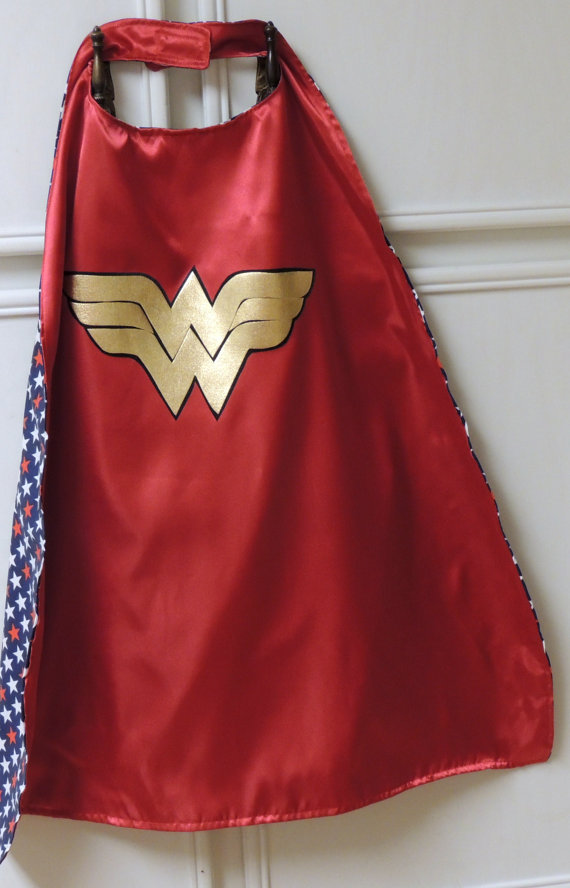
capeLast week was rather upsetting to me as I realized I can no longer continue doing my job 100% when treatments take me away from the office for 15% of the work week. I had to tell a project lead that I needed to pull back from his work for the next month or two. He was exceedingly understanding. And several managers have reminded me that I should not feel like I have to keep doing it all. One person told me that I need to take off my Wonder Woman cape for a little while.

Pushing some tasks off my plate was a big relief; I feel much better able to cope with treatments and life this week. But what I’m wondering is, for so many of us, why does it take a serious illness or another major life event to feel like it’s OK to say, “No, I can’t do everything that everyone wants me to do”? Why do we ever feel like we have to don the Wonder Woman (or Superman) cape?

I have colleagues who work nights and weekends routinely to catch up. Friends who struggle to meet the demands of three or four volunteer positions. Acquaintances who travel so often that they miss family milestones. And fellow mom buddies who feel they must orchestrate elaborate birthday parties, craft homemade teacher gifts, or come up with 25 novel scenarios for their Elf on a Shelf each Christmas.

We end up doing so much that we lose the joy in any of it. We grow resentful of jobs, service opportunities, even kids’ sporting or theater events because there just aren’t enough hours in the day. We don’t have the energy. A generation ago, at least folks observed a sabbath day each week (whether Sundays or Saturdays), reserved for relaxing and family. Today, it’s just another day for running errands or checking work email to avoid starting the new week too far behind.

What would happen if we all took off our super-capes and set some limits? Not because we have to for health reasons, but because we want to. Sure, people will be disappointed. Some things won’t get done. We might even have to give up some status or (gasp!) money. But odds are, nothing that gets knocked off our to-do lists will be essential.

Although we might experience a tinge of loss or a hit to our pride in the short term, what we gain in the long term will be worth it: More time with family and friends. More time to read, enjoy a hobby, or be alone with our thoughts. We’ll set a better example for the next generation. And we might, just might, stop feeling so frazzled and stressed. How about it—Will you try hanging up your cape?

(photo credit: auntbunnysblankets, etsy: https://www.etsy.com/listing/111694506/child-wonder-woman-cape-wonder-woman)

Choosing to See the Good

A friend posted something on Facebook yesterday that really spoke to me:

“‘Recognizing the good’ does not deny the painful realities of life, but instead moves faithfully into the space of contradiction and says ‘yes’ to the good, true, and beautiful things that are all around us.” (a passage from A Movable Feast: Worship for the Other Six Days by Terry Timm)

I have found myself grappling in extra measure this week with being in the “space of contradiction,” trying desperately to fix my eyes on all that is still good and right in the world, yet coming face to face with the painful, tough stuff of life day after day.

Each morning, I am greeted by radiation techs who are smiling, warm, and caring—doing their best to make me comfortable. By all measures, beautiful examples of health care providers doing things right. Yet, I cannot deny the looming, buzzing cancer-killing machine that sits mere inches from my body. And the whole process of radiation remains a space of contradiction to me. It is intended for healing, yet with each passing day, I notice signs of the effects on my body that feel like anything but healing.

I found myself behind a hearse the other day. A shiny, silver Cadillac decked out with chrome trim, padded vinyl top, and curtains in the window. Inside, I could see the glossy, rounded top of a casket, the inside of which was no doubt lined with pleated, white fabric and a fluffy pillow to dress it up. The vehicle and the casket were intended to be beautiful and stately, bringing a measure of class and dignity to the deceased. Yet, the whole reason for their existence is death. I couldn’t help but think that somewhere, there was a family whose hearts were breaking at the loss of a loved one.

The grittiness of life exists alongside potential good and beauty in so many situations we encounter. It is a conscious decision to focus on the positive, the beautiful, the blessings. Sitting on my porch on a sunny, warm Saturday morning and enjoying the bustle of life in my neighborhood, that’s not so difficult. At other times, it is a hard-fought resolution not to be mired in the ugliness in the world—whether in my own little sphere or across the globe somewhere.

There’s a verse in Philippians 4 that tells us, “Finally, brothers and sisters, whatever is true, whatever is noble, whatever is right, whatever is pure, whatever is lovely, whatever is admirable—if anything is excellent or praiseworthy—think about such things.” I think that verse is in there because God knows we need to be reminded where to direct our minds in this world that is at once so broken and so glorious.

I know this post echoes others I’ve written—that idea of hope and good in the midst of trial or pain. Perhaps that’s a natural mental space to hang out in when facing a situation like mine. Then again, maybe it’s not so natural. There are plenty of folks I have encountered in the waiting room who clearly do NOT have that bent. Their faces are hardened into a frown, they complain often, and they seem, at least to me, to be miserable. So, I suppose I’m OK with not getting points for originality in my recent writings—if it helps me (and maybe the couple dozen folks who read this blog) to remember to choose to see the good.