On the Loss of My Mothers-in-Law

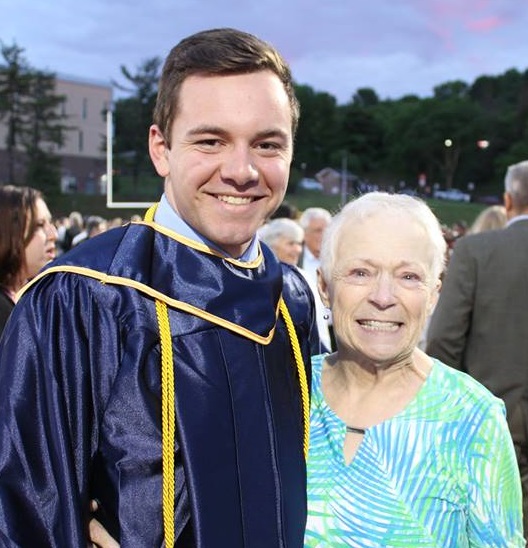
daniel and grandma carol
Carol
mary
Mary

In June, my husband lost both his mom, Carol, and his stepmom, Mary — one, to cancer; the other, to Alzheimer’s. My heart breaks for him, with those two losses coming within weeks of each other.

That meant also that I lost both of my mothers-in-law, which has made me quite sad.

Mothers-in-law often get a bad rap. Movies and jokes portray them as domineering and critical or coddling their married sons or meddling far too much in the daughter-in-law’s business. When I got married and told people I had two mothers-in-law, many groaned on my behalf. But I tell you, I hit the jackpot. Twice.

As soon as Brad and I started dating, both Carol and Mary welcomed me into the family, and we enjoyed a comfortable, congenial relationship. I never felt like the outsider. Carol never made me feel like “the other women” who had “stolen” her son. Over the years, I grew to love these women as second and third moms in my life. And they loved me — and showed me often with hugs, kind words, and thoughtful gifts.

Not only that, they liked each other. How many families do you find where the ex-wife and the new wife are legitimately friendly? Carol and Mary worked together to organize our rehearsal dinner. They chatted warmly at our boys’ birthday parties. And they asked us about each other often. The love they had for us overflowed into love for each other. That was a tremendous gift to us and our children — and a testament to the kind spirit each possessed.

Sadly, we lost the ability to have conversations with Mary years ago as her Alzheimer’s progressed, leaving her essentially silent and still. But I had grown accustomed to talking to Carol regularly, particularly after we moved away several years ago. We had long conversations. I’d update her on our boys’ activities, we’d talk about my work, she’d tell me what she’d been up to (and, over the past year, what recent doctor visits or tests or procedures she’d had). We’d laugh a lot. And sometimes we’d share deeper, darker things — especially over the past months as the cancer took its toll. I miss those conversations. I miss her cheerful “Hey, sweetie” when she answered the phone (in fact, that seemed to be a theme among people at the funeral — she had that cheerful greeting for everyone).

The world feels slightly colder and grayer for the loss of the smiles and warm souls of these two women.

Years ago, a pastor preached a sermon out of Ruth and pointed out that words used at weddings, presumably speaking of the bride and groom, are actually spoken by a woman to her mother-in-law. Ruth 1:16 — “Where you go, I will go, and where you stay I will stay. Your people will be my people and your God, my God.” That verse, and its real meaning, have been tucked away in my brain ever since, and it came rushing to mind as we prepared for Carol’s funeral. Although I didn’t literally follow or stay with my mothers-in-law, we definitely had a closeness and love that this scripture speaks to. I have been blessed, indeed, to call Carol and Mary “my people.”

We become our best in community

In one month, my eldest son will graduate from high school. It’s an exciting, overwhelming, and humbling time of transition for our family–and it’s causing me to reflect on, well, just about everything in life. One thing that keeps bubbling up in my mind and heart is all the people who have walked with us along life’s path and their influence on so many aspects of our family. Some of those people have been with us through every milestone through the past 22 years. Others have come and gone from the daily rhythms of our lives. But each has left lasting impacts.

We humans are meant to do life in community. We all need others to join our hearts with–in love, in friendship, in faith, in vocation. I am abundantly blessed that I have had those relationships in spades. My soul overflows with joy when I recall the many individuals who have supported and encouraged me, challenged me, corrected me, pointed me to God, brought out my best, and stood by me at my worst.

I know my boys have had those relationships, too. With the obvious folks, like parents, grandparents, and extended family. But also with teachers who recognized what was special in them and nurtured that. The parents of their friends, who provided a safe and welcoming place to hang out. Other adults at church who’ve taken an interest in their activities week to week. Scout leaders and coaches who have challenged them to work hard and reach for the next level. YoungLife leaders who have shown them what living out your faith can look like. And good friends who have been playmates, teammates, confidantes, and sometimes partners in crime throughout childhood and adolescence.

We have been complimented frequently in this season on our boys’ accomplishments and told that they have become delightful young men. Those words warm my heart tremendously, but I know we can’t take full credit. The generous gift of community we have experienced in so many ways has shaped who they are as much as we have. And I’m excited to think about the individuals who will form their community as they venture off to college, start careers, and raise families of their own. I pray for those individuals now, and I pray that my sons will be positive influences on the people they encounter along life’s way.

Reflections on the Citizens Fire Academy

When our boys were little, we often visited fire departments. In fact, on many vacations, we poked our heads into a fire station garage to see if we could look around. Our boys climbed into trucks, put on helmets and coats, and held the heavy tools. The boys’ eyes were wide as we toured stations and shook hands with these real-life heroes. They were awe-struck by the shiny big engines covered with chrome and lights and hoses. They listened intently as the fire fighters told them about their jobs.

cfa-geared-up-for-the-burn

Fast forward 15 years, and now I’m the one touring fire stations. I’m the one who gets to climb into trucks—but more than that, I get to ride along on calls, with sirens blaring and lights flashing. I get to wear the helmet and hold the tools—but more than that, I get a full set of turnout gear and actually use the tools. I’m the one staring wide-eyed at fire fighters as they tell us about their jobs—but more than that, I’m trying to commit to memory the details of every task I’m shown, because I know I will soon have to DO those things myself.

Such was the Citizens Fire Academy—the CFA. Run by the fire departments of Mt. Lebanon, Castle Shannon, and Dormont, the CFA is nine weeks of learning what it is to be a fire fighter. Not with lectures and demonstrations alone, but with hands-on experience. Cutting apart a car with the Jaws of Life. Donning an SCBA for search-and-rescue in a smoke-filled building (theater smoke, but still). Hydraulically ventilating a room to clear it of smoke. Climbing a 100-foot aerial ladder. Wrestling a charged fire hose. And standing in a 1,000-degree room while a fire roars in the corner and flames lick across the ceiling.

It was all incredibly interesting, often intense, and loads of fun! And being able to do these tasks was personally satisfying.

Now that it’s over, I am going to miss the weekly excitement and challenge. I’m going to miss being in situations that require me to engage my brain, my body, and all of my sense at once. I’m going to miss the folks in my platoon. And, I’m not going to lie, I’m going to miss my turnout gear—heavy and hot as that stuff was, I felt invincible and powerful in it.

But even more, I’m going to miss the fire fighters who led this program, most of whom are volunteers. They gave so many hours of their time to put the CFA together—on top of the hours they devote to training each month and whatever calls they respond to—and they all seemed happy to do so. Their passion for the job was contagious. Their eyes twinkled as they told stories of past fires and rescues. Their laughs boomed through the fire station bays. Their patience in answering our many (many, many) questions, both technical and mundane, was admirable.

Perhaps most meaningful was the welcome into their brotherhood/sisterhood for this short season. They included us in the joking and ribbing that so naturally flows within this extended family, encouraged and helped us, and celebrated our accomplishments as most of us operated well outside of our comfort zones. They earned a special spot in my heart. I’ve always looked up when a fire truck went by. But now I look extra closely to see who’s inside… and I smile when I recognize some of them.

The CFA provided a perfect mix of adventure, intellectual and physical challenge, and the satisfaction of belonging to something bigger than ourselves—if only for a couple of months. The memories of this experience will stick with me for a lifetime.

Ma-ma-ma-mammogram-ma

(Note: Title is to be sung to the tune of The Knack’s “My Sharona”)

Today was my yearly mammogram. Given the results of last year’s mammogram and the cancer journey that followed, I was rather nervous about the outcome.

Thankfully, I go to an imaging center that has a doctor on site to read the films while you’re there. No waiting for a phone call a day or two later. I was able to walk out of there knowing there were no signs of trouble. See ya in another 12 months.

When I got the results, I realized just how stressed I’d been about this post-treatment milestone. It was as though a giant weight lifted off my shoulders. I’d made the appointment before Christmas, so I’ve been anticipating this appointment for over a month. And I entered the new year knowing I had the mammogram–and whatever it might reveal–waiting for me. As the nurse handed me the letter saying “no signs of cancer,” the fear I’d been holding at bay washed away in a moment and I could feel myself exhale fully for the first time in awhile.

It has been hard to embrace the new year not knowing whether I’d be facing another wild ride of medical procedures and treatments or a clean bill of health. So tonight, I’m having my own little, quiet new year’s celebration. Bring on 2016!

How I Hope My Boys Will Remember Me

mom and boys

Some conversations I’ve had over the past several weeks with my mom and with friends about their moms/stepmoms has left me wondering what my children will say about me when they are grown and on their own, and even one day (many decades from now, God willing) after I’m gone.

I am certain they would not say now, nor will they ever say, that I was the perfect mother, best mother, ideal mother. And I’m OK with that–I’ve never claimed to be anything but imperfect. I’m sure as they get older, they will tell stories of some of the embarrassing and terrible things I did, and they’ll laugh or shake their heads.

But what I hope they would also say is this:

I love them 100%. My heart expanded at the birth of each of my boys, and as they have grown, so has my love for them. They are among my very greatest blessings and joys. And my love has never waned, even when I’ve had to discipline them, gotten angry, or been disappointed. I hope they know with certainty that there is nothing they could do to diminish or change my love for them.

I love their dad. I’ve heard it said that the best thing a dad can do for his kids is to love their mother. It goes the other way, too. My marriage existed before children entered the picture, and I intend for it to last long after they’ve left the house. Thus, I’ve cultivated a strong relationship with my husband, their dad. I’ve made time for date nights, shared in his interests, and shooed the kids off to play when we needed time for adult discussion. When my boys consider a spouse, I hope they will recall how mom and dad love each other, enjoy spending time together, and make each other a priority–and I pray they will seek the same for their marriage.

I am their mom… and many other things, too. I have proudly worn the title of Daniel and Adam’s mom and have lived into that role the best I can. I’ve gladly worn baseball photo pins, bejeweled my wrist with bracelets beaded by clumsy little-boy fingers, and even answered to a young friend who addressed me, “Hey, Daniel’s mom.” But I have made a point to maintain an identity of my own, too–making time my own interests and pursuits, both professional and personal. I think it’s important that my boys know that as wonderful as motherhood is, the role of mom alone does not define me. I am many things–writer, colleague, singer, volunteer, leader, friend. I hope this example will prepare them to understand one day that the woman they marry can be many things in addition to “wife” and, if they have children, “mom.”

I’ve helped without hovering (well, without hovering too much). Knowing when to step in and when to step back can be one of the toughest decisions as a parent, whether the kids are toddlers or teens. I hope that my boys will say I did a healthy combination of both (at least that was my intention)–giving them freedom to spread their wings and to learn from their own mistakes, but offering guidance and support when needed. When they were little, that meant stepping away from the climbing wall to let them scale the height on their own, but also swooping in to tend a scraped knee when their ambition exceeded their ability, then encouraging them to try again. As they’ve reached the teen years, it’s meant giving them latitude to manage their own time for school, extracurricular activities, and social time–and offering suggestions for how to better apportion that time, or removing some activities from their plate, when grades started to slip. I have tried to be a steady presence for them without being ever-present.

I’ve insisted they learn to do for themselves. Since the kids were in middle school, they’ve done their own laundry. And when they want to eat between meal times, they are expected to fix their own food. I even made one of them iron his shirt the other day (the nerve!). I work from home in order to be available to the kids, so one might wonder why I don’t take care of these things for them. But one day, when my boys move out on their own, they will need to know how to wash, iron, cook, clean, shop, etc. Better to learn it at home, where they can receive some instruction and coaching, so they enter the world prepared. I believe their future college roommates and future wife will thank me, too.

I’ve made mistakes, but I’ve learned from them. I’m hoping neither of my boys has kept a mental record of all of my parenting foibles (or maybe I should line up a counselor for them now). I have raised my voice and spoken harshly to my children. I have forgotten to do something they needed. I have expected more than they could give developmentally. I have set boundaries that were too rigid and given more leeway than was wise. Thankfully, none of my missteps has had dire consequences. But from these mistakes, I have learned to say, “I’m sorry, I was wrong.” I’ve learned different/better ways to react and respond to certain situations, and how to avoid them altogether. I hope I’ve shown my boys that it’s possible–and wise–to realize you’re doing the wrong thing and change your behaviors or decisions accordingly. Since they have continued to love me despite my shortcomings, I hope that means that as a result of my mistakes, they have learned a bit about forgiveness, too.

Not a perfect mom, clearly. But I hope and pray that my boys will think of me as being a good mom–or at least good enough. And that they will discard any bad examples I’ve set and perpetuate the healthy ones.

Parenting: A Journey Toward Separation

My eldest son got his license two weeks ago, ushering in a new (and slightly terrifying) age of independence. And yesterday, we met with his school counselor to discuss plans for college and the future. All of this has made me quite aware of how quickly the clock is racing toward his adulthood. (OK, that’s not an entirely new awareness as I realize my last blog, just a month ago, also acknowledged that my boys won’t be home with me forever.) It has also made me reflect afresh that parenting is in large measure a gradual process of separation.

This moving apart begins the day a baby is born, leaving the confines of Mama’s womb, and becoming his own little person in the world. From that moment, our job as parents at every stage of development–whether we realize it at the time or not–is all about helping that little person become more and more independent and preparing him to one day leave us.

For most of us, the transitions toward separation come quietly and routinely, and we may not even recognize fully what’s happened until we look back from the next stage of childhood or adolescence.

One day, he needs you to hold his tiny head steady against your chest. The next, he’s rolling over and sitting up all by himself.

One day, he relies entirely on you for nourishment. The next, he’s feeding himself Cheerios in his high chair.

One day, he is sitting on your lap on a park bench. The next, he is climbing the jungle gym while you watch from a few feet away.

One day, he needs you to dress him and put his shoes on. The next, he’s shouting, “No, I do it!”

One day, you’re driving him to preschool. The next, he is hopping on a bus or walking to school with a group of friends.

One day, you’re pulling him in a wagon. The next, he’s speeding down the street on his bike.

One day, he is working on homework at the kitchen table and asking you for help. The next, he’s studying in his room with the door shut, rolling his eyes at you if you interrupt his work.

One day, he’s picking you flowers from the yard. The next, he’s picking out a corsage for his date to the dance.

One day, he’s asking you for a ride, and you get to sneak in some one-on-one conversation on the way. The next, he’s borrowing the car and driving himself to wherever he needs to go.

One day, he’s sleeping in his room just like any other day. The next, you’re dropping him off at a big, new university, where he’ll set up a new room, make new friends, and cultivate a whole new life you’re not regularly part of.

We’re not quite to that last transition point. But it’s looming on the horizon, growing closer every day. And it’s scary.

Yet, he’s navigated all the other transitions just fine–all those baby steps toward independence (and the big ones, too). So I suspect he will do the same when the day comes for college. And I’ve survived all of the growing-up moments so far that tug at a mom’s heart, and sometimes break it just a little. So, I suspect I’ll make it through the transition to college, too, when it comes….and when he moves away for his first big job….and when he gets married. (Oy! But, let’s not get ahead of ourselves!)

In the meantime, my job is to continue doing what I can to help him, and my younger son, too, become their best selves. To equip them with practical skills, solid values, a compassionate heart, and a strong faith that they can take with them into this wide, wonderful world. And to make sure they know that no matter how far the distance, no matter how old they get, no matter how long our time apart, there is no degree of separation that Mom’s love can’t span.

Neither Snow Nor Rain Nor Heat… Will Keep This Mama from the Sidelines

It was cold yesterday afternoon. A snow-flurrying, wind-blowing, teeth-chattering kind of cold. And I was sitting in a camp chair along the fence at the little league ball park, huddled under a blanket watching Adam’s team go for a second win in the playoffs.

In the parking lot at the top of the hill, most of the other parents were watching from the comfort of their cars, sheltered from the wind and chill. I considered doing the same after a couple of innings, as my nose began to run and my toes grew a bit numb through my lightweight sneakers.

But watching the game separated by distance and a windshield didn’t feel right. I’m not as present that way. My teenage boys may not come running over to me with excitement between innings or at the end of a game like they did when they were in elementary school, but I know they still appreciate me being there to cheer them on. They glance at the sidelines or into the stands to find Mom and Dad. Sometimes they even give a nod or a smile. They can’t do that if I’m way off in the parking lot or just dropping them off and returning a couple hours later.

Not judging the other parents. Only speaking for me here. And for me, it’s important to be at as many games and other activities as I can and to be close enough to see their faces (or at least the number on their uniform) and hear the ball hit their bat or cleat kick the football–even if that means waving bugs or dust away from my face, sweating in the summer sun, huddling under an umbrella, or wrapping up in as many layers as I can find.

These boys of mine will only be at home for a few more years. I want to take advantage of the opportunities I have now to watch them do what they enjoy. To watch them interact with their friends and coaches and youth leaders. To get a glimpse of who they are in the world, not just within the boundaries of our home and family.

My hope is that, because I’ve shown a deep interest in their activities, when they go off to college and enter adulthood, they might be more inclined to share what they’ve been up to. They’ll know I’m interested. They’ll know I want to hear their stories. And maybe they’ll even remember the example we set and be interested in each other’s lives, too, and actively involved in their own kids’ interests one day.

Breast Cancer Awareness Month through the Lens of a First-Year Survivor

Breast-cancer-awareness-month

Just in case you missed all the pink, it’s October–Breast Cancer Awareness Month.

It takes on a different meaning for me this year than in years past. This year, I view the health observance through the lens of someone who has recently lived through hearing “It’s breast cancer” and all of the fear, pain, uncertainty, discomfort, exhaustion, and blessings (yes, blessings) that come with diagnosis, treatment, and recovery.

Up to now, I have been reluctant to say I am a cancer survivor. My experience was so much milder than many who have had breast cancer that I felt I hadn’t “earned” the title. I was also reluctant to bear that title because I did not want cancer to be part of my identity. But, I have realized that my experience with cancer IS part of who I am–as much as any life experience is, good or bad. And I can choose how to frame that experience–as good or bad.

So, I am choosing to use this month to speak out as someone who’s “been there”–to advocate for early detection and to reflect on lessons learned through my breast cancer journey.

First, the advocacy piece…  Women, if you’re over 40 and haven’t had a mammogram in the past year, talk to your doctor. Get an appointment and get screened. Yes, it’s unpleasant. Who wants to hug a cold, hard machine while having their breasts smashed into pancakes? But do it.

If your doctor says you don’t need a mammogram this year because you had one last year, consider pushing back. The U.S. Preventive Services Task Force, which issues public health recommendations, has recently said that every couple of years is enough for women starting at age 50, though they add that when to start having mammograms and how often to have them should be an individual decision for each patient. You have a right to question your doctor if he or she says you don’t need it. The American College of Gynecologists still says every year starting at age 40.

A routine yearly mammogram found my cancer at age 44–and found it very early, when I had the best prognosis and easiest treatment possible. Had I waited another year, it could have been a much different story.

And the lessons learned through this experience? There are several, which can probably apply to probably most major life hurdles:

  • When recovering from surgery, nothing tastes as good as food your friends have prepared. It’s tempting to push away help because it makes you feel needy. But we all have times of need. Letting friends and family meet your needs not only helps you to cope with whatever trial you’re facing, but also helps to build connection and community.
  • Prayer is a powerful thing. At many times during testing, diagnosis, surgery, and radiation, I put out a call to friends to pray for me–for good results, for peace, for comfort. And I did my own fair share of praying myself. It had a very real effect in calming my nerves, changing my attitude, and bringing me a peace in the midst of fear or pain.
  • Worrying about tomorrow makes it harder to get through today. It was hard not to worry about upcoming procedures or treatments, to wonder about the outcome of surgery, to guess for how many weeks I’d feel tired, sore, and foggy from radiation treatments. But no one could predict the future; I just had to wait and see. Whether the day brought lots to think about and plan for, or was pretty much “normal,” it was helpful to try to live into each day and not jump mentally to the next. I didn’t always succeed at that–but it was so much better when I did.
  • No one will die if your house isn’t clean. For awhile I tried to keep up with everything I did before being diagnosed with cancer. But over time, I realized that, for a season, I had to slow down. You only have so much physical and mental energy. The house didn’t get tidied and cleaned as often. I didn’t do as many volunteer activities. And I even took a short leave of absence from work. What truly needed to get done, got done–sometimes by me, sometimes by other people. I think pride gets in the way, and we convince ourselves that if we don’t do all the stuff we’ve been doing, somehow life will fall apart. It doesn’t.
  • That which doesn’t kill you makes you…. different. I know, it’s supposed to be “…makes you stronger.” Not sure I agree with that saying in all cases. But any adversity–serious illness, divorce, job loss, death of a spouse, whatever it is–makes you see life a little differently. It gives you knowledge and experience you didn’t have before, that maybe you can share with others. (That’s already happened twice with women I know who have recently been diagnosed with breast cancer.) It helps you appreciate even more those friends and family members who rally around you in your time of need. And a trying time can spur you to make changes in your life that might help you avoid a repeat of the trying time–whether that’s changing bad habits, starting healthy new habits, re-examining decisions, or re-evaluating relationships. It can be an opportunity for a life “reboot.”

I won’t go so far as to say I’m glad I had breast cancer. But, as one friend has encouraged, I will say I am proud to have gone through it and come out the other side. And I’m prepared to pass along any knowledge I’ve gained and share hope–most especially hope–with anyone who finds herself walking the same road.

Consider the Daylily: Part 2

After a few years, daylilies grow into larger and larger clumps, becoming overcrowded. When this happens, they don’t flower as much, and it’s time to divide the plants. Although this may seem traumatic to the plants, in the hands of a skillful gardener, the division and replanting brings additional, healthy growth and abundant flowering.

So it goes with us. Every now and then, we must go through division, trial, difficulty, testing in order to stretch, improve, and become stronger or more fruitful. No one likes these experiences. They can be unpleasant or even traumatic. But in the skillful hands of the Ultimate Gardner—our Heavenly Father—we can be confident that the result will be growth and abundant living, to our benefit and the benefit of the world around us.

Consider the Daylily

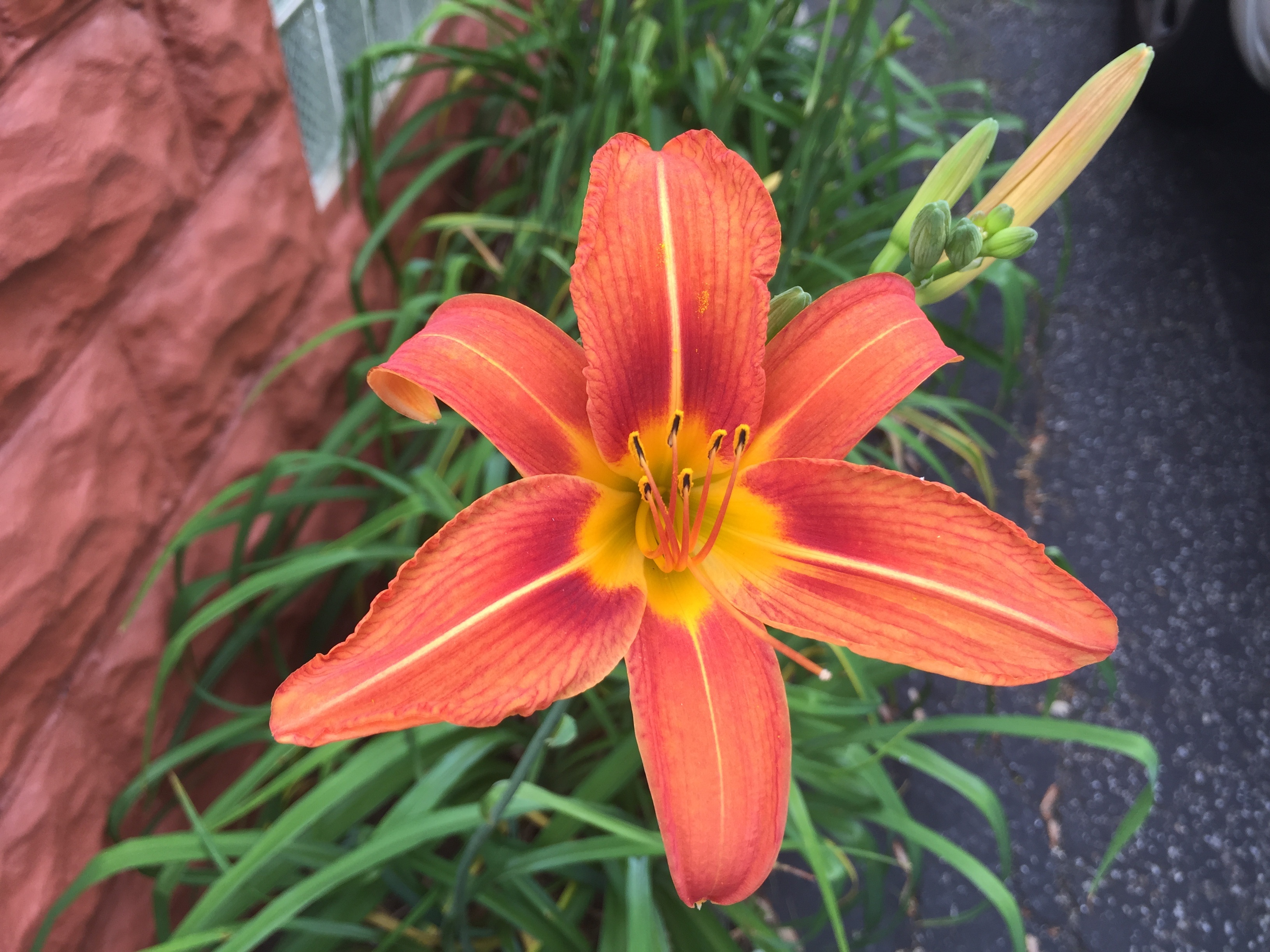
daylily

All over town, there are seemingly countless daylilies dotting flower beds and lining driveways and lot lines. Many are small and yellow, growing in large bunches of identical blooms. Others are large and bright orange, standing proudly atop tall stalks. Still others are blends of crimson and gold, purple, or white—those can be quite spectacular.

Magnificent or simple, each daylily blossom lasts only a day. It closes in the evening and fades, replaced by others the next morning.

Our lives are a bit like that. Each day we have on this earth lasts for, well, only one day. We can’t change yesterday, and we aren’t guaranteed tomorrow. So, all we can do is live fully into today and, to quote a plaque my grandmother gave me as a little girl, “Bloom where you’re planted.”

Some of our days are like the big bunches of small, yellow lilies—ordinary, unremarkable, similar to many other days. But we can work to make even those days beautiful and special. Other days are like the bright orange or crimson or purple lilies—those are days of graduations, births, promotions, rainbows after storms, phone calls from old friends, family vacations. Those days are naturally more notable and beautiful. Hopefully on those days, we can pause to reflect on the joy of the moment and be grateful.

Of course, there are daylilies that fail to bloom because of lack of water, bug infestation, or being nibbled by hungry deer. Similarly, some of our days are filled with disappointment, illness, loss, and struggles. But just as a daylily plant has many blooms, appearing day after day, we can hope for another new day and pray it blooms a little brighter.